Industrial boilers rely on clean, high-purity feed water to maintain thermal efficiency, prevent internal scaling, avoid corrosion, and extend the service life of heating and steam systems. Impurities such as suspended solids, hardness minerals, dissolved salts, oxygen, and carbon dioxide in raw water can severely damage boiler tubes, reduce heat transfer efficiency, and even trigger safety hazards during long-term operation. Therefore, standardized industrial boiler water purification is essential for stable thermal power operation and sustainable industrial production. This article explains how to purify boiler water through a professional multi-stage treatment process.
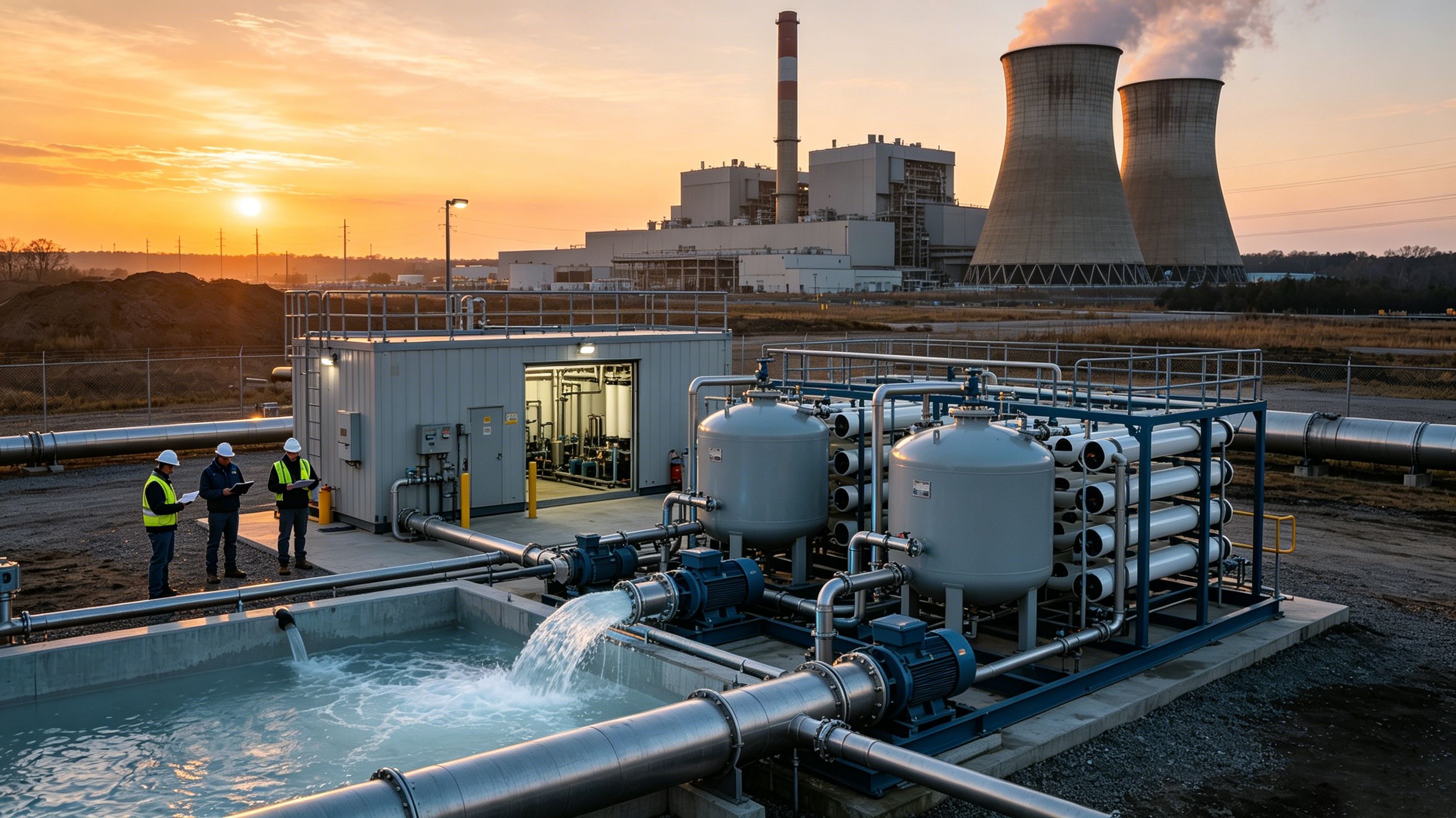
1. Raw Water Pre-Treatment: Remove Visible and Large Impurities
The first step of boiler water purification is pre-treatment, which aims to eliminate suspended sediment, colloids, organic matter, rust, and large particulate contaminants from raw water. These impurities can easily block subsequent precision filtration equipment and scratch boiler internal components if not removed in advance.
Common pre-treatment equipment includes multi-media sand filters, activated carbon filters, and precision cartridge filters. Sand filtration intercepts sediment and turbidity; activated carbon adsorbs residual chlorine, organic pollutants, and peculiar odors; final micron-level cartridge filtration ensures stable water quality before entering the core desalination system. Complete pre-treatment protects downstream equipment and lays a foundation for high-purity water production.
2. Water Softening: Eliminate Hardness and Prevent Scale Formation
Water hardness caused by calcium and magnesium ions is the primary cause of boiler scale accumulation. When hard water is heated continuously in boiler systems, insoluble carbonate precipitates adhere to the inner wall of heat exchange tubes, forming hard scale that drastically reduces thermal conductivity, increases energy consumption, and may lead to local overheating and pipe burst risks.
Ion exchange softening systems are widely adopted in industrial boiler scenarios. The equipment replaces calcium and magnesium ions in raw water with sodium ions, effectively eliminating water hardness. Regular resin regeneration ensures long-term stable softening performance, which is indispensable for low-pressure and medium-pressure boiler water pretreatment.
3. Reverse Osmosis Desalination: Remove Most Dissolved Solids
To meet higher boiler water purity standards, reverse osmosis (RO) technology serves as the core desalination process. The RO membrane can intercept more than 99% of dissolved salts, heavy metal ions, fine colloids, and microbial contaminants in water, greatly reducing the total dissolved solids (TDS) of feed water.
Compared with single softening treatment, reverse osmosis purification effectively solves the problem of residual soluble salts continuously concentrating during boiler evaporation. It significantly reduces the frequency of boiler blowdown, improves thermal utilization efficiency, and lowers long-term operation and maintenance costs for industrial heating systems.
4. Advanced Polishing with EDI: Achieve Ultra-Pure Boiler Feed Water
For high-pressure industrial boilers and power generation thermal systems, RO water alone cannot meet ultra-pure water standards. The EDI (Electrodeionization) system is adopted for deep polishing treatment. EDI removes trace residual ions in RO produced water without chemical agents, producing stable ultra-pure water that fully complies with industrial boiler feed water specifications.
This chemical-free continuous purification technology ensures stable water conductivity, avoids secondary pollution caused by traditional chemical deionization, and adapts to long-cycle, high-load industrial boiler operation requirements.
5. Deaeration and Chemical Adjustment: Avoid Oxidation Corrosion
Dissolved oxygen and carbon dioxide in purified water will cause electrochemical corrosion inside boilers and steam pipelines. The deaeration process heats feed water near boiling point under vacuum conditions to discharge dissolved gas, effectively reducing oxygen corrosion risk.
Meanwhile, professional water quality regulators are used for trace chemical adjustment to stabilize pH value and inhibit internal rust and scaling. Combined physical and chemical treatment guarantees long-term safe operation of thermal equipment.
6. Real-Time Monitoring and Regular System Maintenance
Boiler water purification is a continuous systematic project. Industrial plants need to monitor key indicators such as water conductivity, hardness, pH, and TDS in real time. Regular cleaning of filter materials, replacement of precision filter elements, and resin regeneration maintenance ensure consistent purification efficiency and avoid water quality fluctuations affecting boiler thermal performance.
Conclusion
Qualified industrial boiler water purification requires a complete set of processes including pre-filtration, softening, reverse osmosis desalination, EDI deep purification, deaeration, and dynamic water quality adjustment. Multi-stage purification not only protects boiler thermal systems from scaling and corrosion but also improves energy efficiency and reduces industrial production costs. For factories pursuing stable long-term thermal operation, configuring a professional boiler water treatment system is a necessary investment in equipment safety and production efficiency.